-
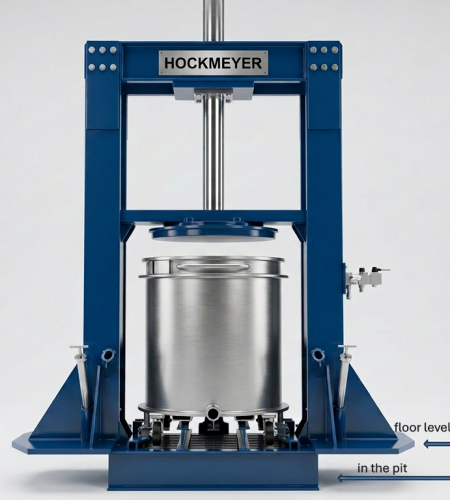
Lift to Discharge Press
Heavy-duty and durable construction raises vessel to an elevation that makes for convenient discharge
View Lift to Discharge Press
-
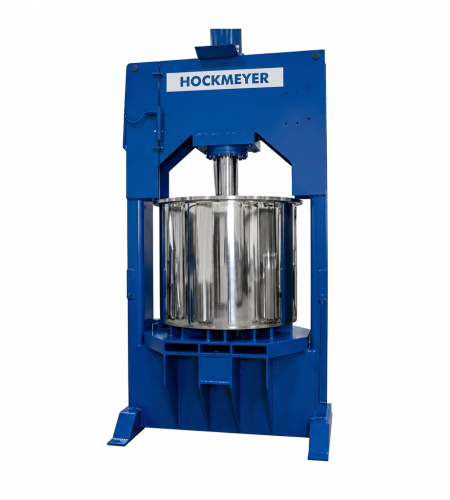
Platform Press
Elevated base Discharge directly to a filler or transfer containers Discharges product at the push of a button Less material waste vs. pump discharge
View Platform Press


Discharge Presses Frequently Asked Questions
-
What is the difference between Hockmeyer's lift-to-discharge press and the platform press?
Detailed configuration options and specifications for both presses can be found in our technical specification sheet.
-
Why are ram presses essential for processing high-viscosity adhesives, sealants, and resins?
Ram presses are designed to feed materials that exceed the practical pumping limits of conventional transfer systems. Products such as silicone sealants, SMPs, MS polymers, polyurethane prepolymers, filled epoxies, structural adhesives, and conductive compounds often exhibit viscosities ranging from 500,000 cP to over 10,000,000 cP, making gravity feeding impractical.
A ram press applies controlled force through a follower plate to generate positive inlet pressure at the pump, ensuring consistent material delivery without cavitation or flow interruptions.
Typical Process Range
- Viscosity: 500,000 to 10,000,000+ cP
- Yield Stress: 50 to 2,000+ Pa
- Solids Content: Up to 95%
- Product Temperature: 15°C to 120°C (59°F to 248°F)
-
How are ram presses sized for a specific application?
Proper ram press sizing begins with evaluating:
Product Characteristics
- Viscosity
- Yield stress
- Density
- Filler loading
- Temperature sensitivity
- Flow behavior
Production Requirements
- Required discharge rate
- Hours of operation
- Batch size
- Container type
Downstream Equipment Requirements
- Pump inlet pressure
- Metering accuracy requirements
- Dispensing pressure
The system should always be sized based on the highest expected viscosity and lowest operating temperature.
-
What ram force is required for my material?
Required ram force depends primarily on follower plate area and desired inlet pressure to the pump.
Basic calculation:
Force = Pressure × Area
Example:
For a 55-gallon drum:
- Drum diameter: 22.5 in
- Follower plate area: 397 in²
- Required product pressure: 60 psi
Required Ram Force:
397 × 60 = 23,820 lb
Approximately:
12 tons of force
Most industrial ram presses are designed with a safety factor of 1.5 to 2.0 times calculated requirements.
Common Hydraulic Ram Capacities
- 5 ton
- 10 ton
- 20 ton
- 30 ton
- 50 ton
- 100+ ton specialty systems
-
How does the press plate design affect performance?
Press plates must create a near-perfect seal against the container wall.
Critical design features include:
Elastomer Seal Options
- Buna-N
- EPDM
- Viton
- PTFE Encapsulated
Construction Materials
- 304 Stainless Steel
- 316 Stainless Steel
- Carbon Steel
Typical Seal Compression
- 0.25 to 0.75 in radial compression
Proper press plate design can increase product recovery from approximately 92% to over 99%.
-
How is the required discharge rate determined?
Discharge rate is driven by production demand.
Typical industry rates include:
Application
Flow Rate
Cartridge filling
0.25 to 5 GPM
Pail filling
1 to 15 GPM
Meter/Mix dispensing
0.1 to 10 GPM
Continuous extrusion
5 to 50 GPM
Composite resin transfer
10 to 100+ GPM
-
How can ram presses support temperature-controlled materials?
Many adhesives and resins are highly temperature dependent.
Common options include:
Heated Follower Plates
- Electric
- Hot oil
- Steam
Heated Drums
- Drum jackets
- Heating blankets
Typical Operating Temperatures
- Ambient: 20°C to 30°C
- Warm processing: 40°C to 80°C
- Specialty materials: Up to 120°C
Reducing viscosity through controlled heating can improve flow rates while reducing required ram force.
-
How do ram presses integrate with automated manufacturing systems?
Modern systems often include:
Automation Features
- PLC control
- Recipe management
- Automatic vessel change alerts
- Remote diagnostics
- Ethernet/IP connectivity
- Profinet communication
Measured Process Variables
- Ram position
- Product level
- Pressure
- Flow rate
- Temperature
- Pump speed
- Material usage
-
What specifications should be included when purchasing a ram press?
A complete specification should define:
Product Data
- Viscosity range
- Density
- Yield stress
- Solids content
- Temperature requirements
Process Data
- Flow rate
- Production schedule
- Batch volume
Container Information
- Diameter
- Height
- Material
Utility Information
- Electrical requirements
- Air supply
- Hydraulic requirements
Performance Targets
- Material recovery %
- Pressure stability
- Automation level
- Cleaning requirements
Services
-
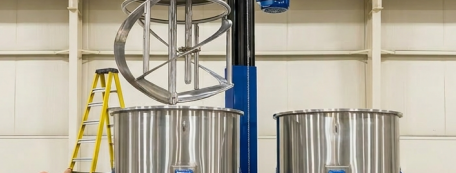
Stock Machines & Tanks NEW & USED
Our dedication to customer satisfaction doesn’t stop with the purchase.
-

Field Training & Support
Hockmeyer is dedicated to providing best-in-class support to maintain the lifespan and efficiency of your Hockmeyer equipment.
-
Equipment Support Program
Learn about how Hockmeyer can provide dedicated service, maintenance, and training through our Equipment Support Program.

