
Features & Specifications
Machine Features
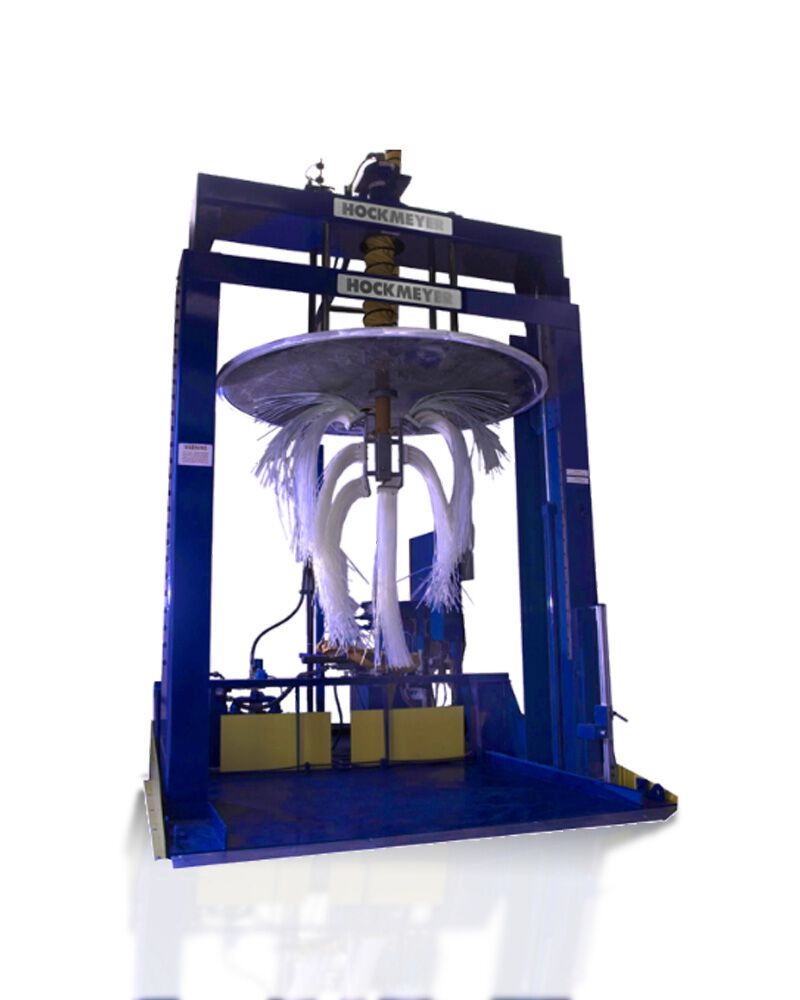
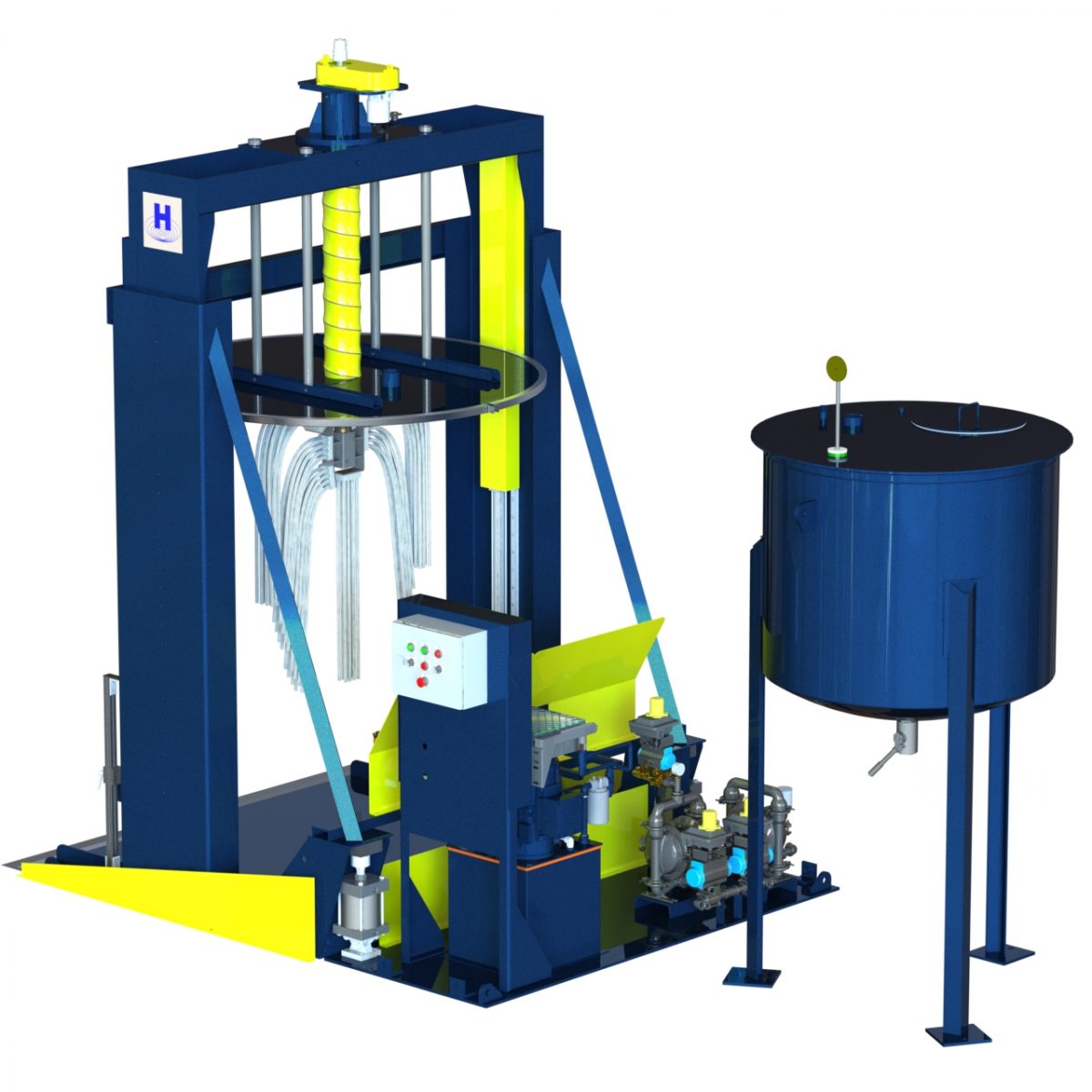
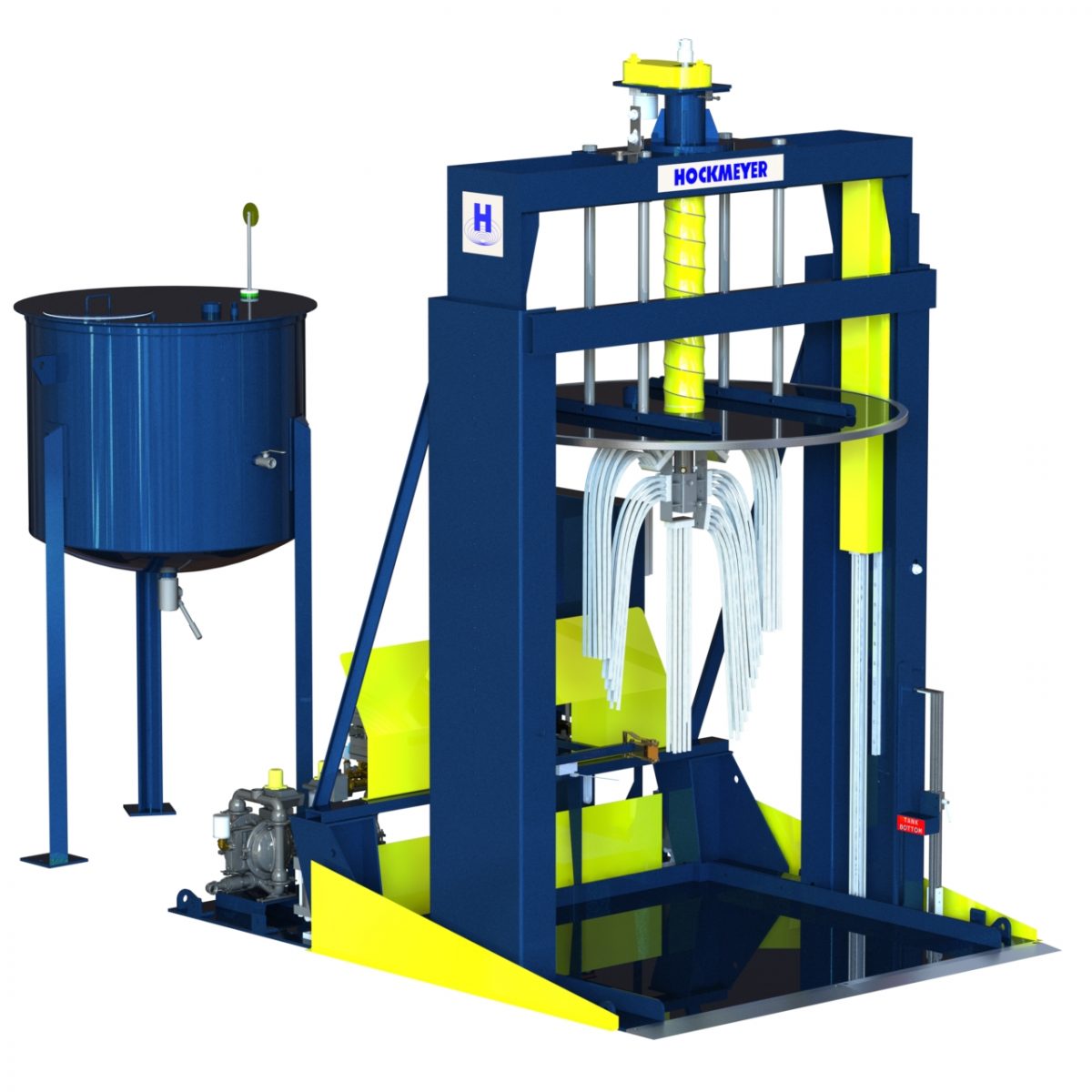
- Steel construction
- Dual high-pressure hydraulic hoists to raise and lower machine on recirculating ball bearing guides
- Skid mounted for ease of installation.
- All hydraulic and solvent connections installed, and factory tested
- PLC control station with keypad display in NEMA 4 cabinet
- One-piece brush bracket to allow quick changes from large to small brush assemblies
- Safe control system for XP environments
- Cleans vessels 36 to 60 inches from 36 to 58 inches tall with options for larger machines available
- An intrinsically safe programmable control system
- Baseline tilting assembly to ensure ease of drainage
- Lid liner can be of Polyethylene or Teflon construction
- Custom brush assemblies available for special applications
Read our article The Merits of Safe and Efficient Cleaning of Process Vessels In A Manufacturing Setting to learn how the CMX-200 can benefit your facility.
CMX-200 FAQs
What are the overall dimensions of the CMX-200 with the higher/wider tank upgrades?
The standard CMX-200 has a 54” rise and a 68” diameter lid. We can adjust the rise and lid diameter based on the dimensions of tanks to be cleaned. We have built lid diameters up to 84” with the polyethylene liner and 72” with the Teflon liner. And the largest rise built is 78”.
Why might equipment disassembly be necessary?
We prefer to ship the CMX-200 assembled to help reduce wiring and piping installation. But depending on door sizes and other pathway restrictions, it may have to be disassembled. The standard CMX-200 is 86” wide x 107.625” long x 104” tall.
Must a hose or piping be connected to the open-top tank’s outlet port during the wash cycle in order to allow draining to occur?
Draining is best handled using the base tilt option. As the solvent is introduced into the tank, it needs to be removed, and we do not offer suction out the top of open-top tanks.
How much room is typically necessary to bring forklifts with tanks into and out of the cleaner?
This will be determined by the size of your tanks and forklifts.
Is it possible to exclude the holding tank from the design if we have alternative means to bring solvent in/out?
Yes, but some type of tank is needed for the used solvent to return to and be reused. Our tank is designed to draw off the solvent from the top, so the sludge settles at the bottom.
Must we install the PLC in a non-rated area?
Yes.
Can the PLC not be installed near the operation station area?
No.
How is it that the terminal box is intrinsically safe (IS) but not the PLC?
Because the IS barriers are located in the PLC cabinet and must be in the safe area.
Can you explain in more detail what the exhaust ventilation upgrade is?
It is connected to a port on the lid. At the end of the cycle, the fan will turn on to exhaust the fumes.
Would we connect the exhaust package to our site’s fume exhaust system, or is it standalone?
It will need to connect to your exhaust system.
How does the valve cleaning unit work?
The valve cleaning unit connects to the tank discharge. There is a pneumatic drill that will spin the brush.
What is the length of the brush?
The brushes can be customized based on the tanks’ dimensions. If the size range is wide, you might require more than one set of brushes. The standard 2” diameter brush has about a 6” reach.
Seems like it is connected via a hose. Would the hose length affect how we position and move the unit?
Yes. The valve cleaning unit connects to the tank valve, and the discharge hose will connect to the bottom of the unit.
What is it hooked up to? Just air? Would a standard air hose and a standard air line work?
Yes. It requires 70-100 PSI. The inlet size to the air regulator is ½ NPT.
When would you use it in the process? After cleaning? Is it operated during the wash cycle or separately?
Depending on how dirty the valve is, it should be operated towards the end of the wash cycle.
Is it operated manually or automatically during the wash cycle?
After the tank is cleaned, it is a finishing step. It is operated manually.
What is considered a “standard” and a “custom” unit? Do the size upgrades make the unit “custom”?
Yes, size upgrades, tilt option, tote adapter, and exhaust ventilation system.
Are there any recommended spare parts to have on hand?
Yes. It is a good idea to keep a set of brushes handy. Our @Parts & Service Team can provide a quote for those. Also, some customers purchase a spare lid liner.
Product Documents
Video & 3D gallery
-
HOCKMEYER CMX 200 TANK WASHER
Image Gallery

Services
-
Stock Machines & Tanks NEW & USED
Our dedication to customer satisfaction doesn’t stop with the purchase.
-
Field Training & Support
Hockmeyer is dedicated to providing best-in-class support to maintain the lifespan and efficiency of your Hockmeyer equipment.
-
Equipment Support Program
Learn about how Hockmeyer can provide dedicated service, maintenance, and training through our Equipment Support Program.
