
Features & Specifications
Machine Features
- Sizes from 2 horsepower to 100 horsepower
- Hoist or tank-mounted
- Inverter driven
- Multiple fixed-position designs on hoist-mounted models
- Stainless steel material of construction
- Mill to highly polished finishes
- Typically designed for atmospheric operation with available vacuum or pressure designs
- Electrical components for hazardous or safe environments
Rotor Stator Applications in the Chemical Industry
Hockmeyer’s rotor stator is widely used across the chemical industry, where high shear mixing is essential for achieving uniform dispersion, stable emulsions, and consistent product quality. The following are among the most common chemical processing applications for this equipment.
- In agrochemical manufacturing, rotor stators are used to produce stable pesticide formulations, where thorough dispersion of active ingredients into liquid carriers is critical for product efficacy and shelf stability.
- Biofuel production relies on high shear mixing to refine vegetable oils and process feedstocks efficiently. The rotor stator delivers the shear intensity required to handle these materials at production scale.
- In drilling fluid preparation, rotor stators rapidly incorporate powders and viscosifiers into base fluids, producing stable, homogeneous drilling muds that meet tight rheological specifications.
- Lube oil formulation requires the high-speed dissolution of viscosity index improvers and additive packages into base oils. The rotor stator accelerates this process while ensuring consistent blend uniformity across batches.
- Paints and pigments are a core application area. The rotor stator handles high-speed dispersion of titanium dioxide and other pigments, production of inkjet coding and marking inks, polymer and pigment dispersion in textile manufacturing, and redispersion of filter cake, delivering tight particle size distribution and stable color development across each process.
- Paper coating production demands precise dispersion of pigments and binders into coating slurries. The rotor stator provides the shear energy needed to achieve smooth, uniform coatings with consistent rheological properties.
- In polish manufacturing, rotor stators support the production of both semi-solid and liquid polishes, where stable emulsification and thorough ingredient incorporation are required for product performance and finish quality.
- Rubber solution processing for adhesive manufacturing benefits from the rotor stator’s ability to rapidly break up, dissolve, and disperse rubber into solvent systems, reducing processing time while maintaining solution consistency.
- Specialty chemical manufacturing encompasses a broad range of demanding processes. Rotor stators are used for fumed silica dispersion, graphene dispersion, bentonite dispersion, paraffin wax emulsification, polyvinyl alcohol solution preparation, resin solubilization into solvents and oils, and xanthan gum incorporation in chemical formulations.
Across these processes, the equipment delivers the controlled, high shear energy needed to achieve stable, reproducible results.
Rotor Stator: Frequently Asked Questions
What is a Rotor Stator?
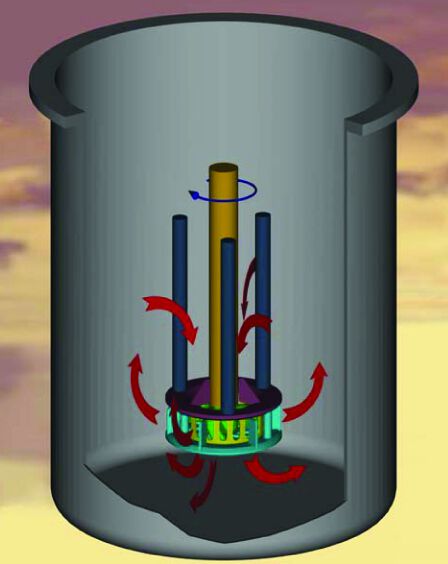
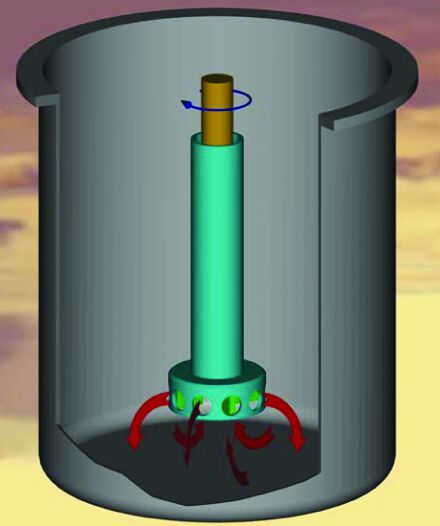
A rotor stator is a High Shear Mixer that utilizes a rotor a stationary stator that typically operates at very high speeds, creating a vortex circulating the product through the gap between the rotor and stator, resulting in a very homogeneous dispersion.
Learn more about rotor stators by reading our “Rotor Stator Principles Guide”
What is the difference between a rotor and a stator?
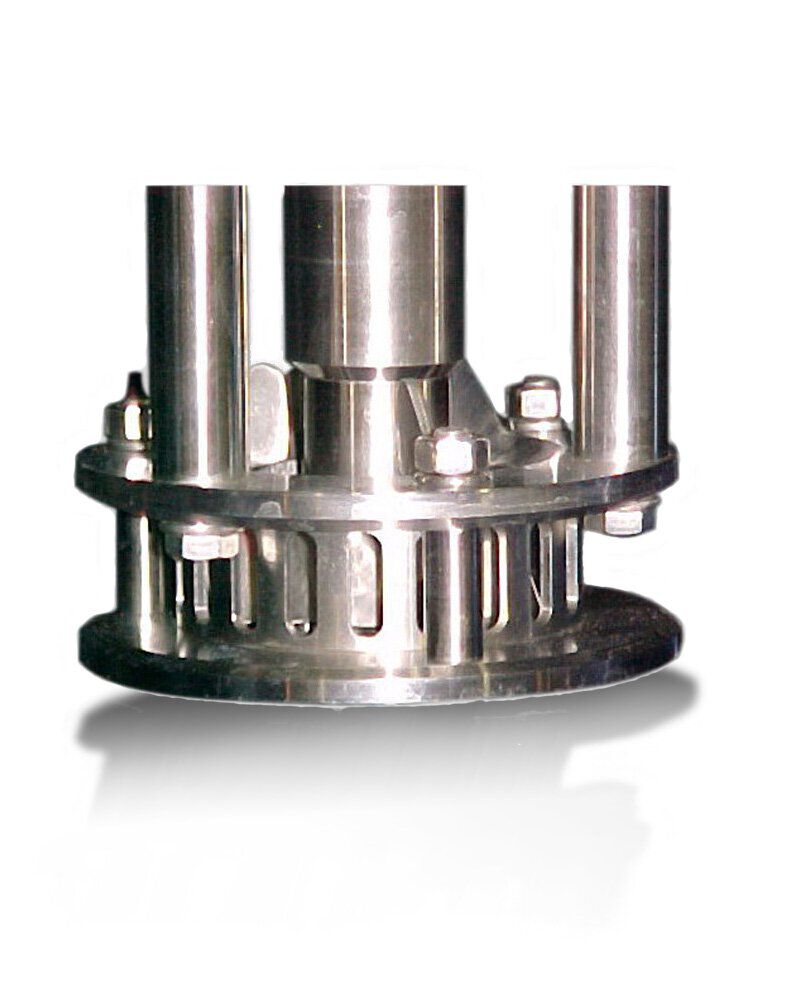
In a high shear mixer, the rotor is the rotating component that drives material movement and generates centrifugal force, while the stator is the fixed outer element that surrounds it. As the rotor spins at high speed, it forces material through the narrow gap between the two components. The stator constrains and redirects that flow, producing the intense shear forces responsible for dispersion, emulsification, and particle size reduction. Neither component achieves this alone and the shear effect is a direct result of the interaction between the two.
How does a rotor stator work?
The rotor spins at very high speeds inside the stationary stator, creating a vortex that draws product into the gap between the two components. Within that gap, the material is subjected to intense mechanical shear, hydraulic forces, and turbulence. This breaks down agglomerates, reduces particle size, and produces uniform dispersion throughout the batch. The result is a highly homogeneous product, achieved through controlled, repeatable high shear energy input.
How do you clean a rotor stator?
Hockmeyer rotor stators are designed to support in-place cleaning, which allows operators to flush and rinse the equipment without full disassembly between production runs. The appropriate cleaning procedure will vary depending on the materials being processed and the regulatory requirements of the industry. For guidance specific to your application, contact Hockmeyer’s service team.
How do you know if a rotor stator is performing poorly?
Common indicators that a rotor stator may need attention include inconsistent dispersion quality, longer than expected processing times, unusual noise or vibration during operation, and visible wear on the rotor or stator components. In process-critical environments, such as chemical manufacturing, pharmaceutical production, or food processing, even subtle changes in output quality or cycle time can signal that the equipment requires inspection.
What food applications can be processed with a rotor stator?
Rotor stators are used in food processing for applications that require high shear mixing to achieve smooth, uniform results, most commonly purees and slurries. These include fruit and vegetable purees, starch slurries, and products where consistent texture and particle uniformity are important. It is worth noting that for smaller-scale food production operations, our rotor stator may represent more processing power than the application strictly requires. For manufacturers running high-volume or demanding food-processing lines where repeatability and throughput are priorities, the equipment performs well and delivers consistent results, batch after batch.
Image Gallery
Services
-
Stock Machines & Tanks NEW & USED
Our dedication to customer satisfaction doesn’t stop with the purchase.
-

Field Training & Support
Hockmeyer is dedicated to providing best-in-class support to maintain the lifespan and efficiency of your Hockmeyer equipment.
-
Equipment Support Program
Learn about how Hockmeyer can provide dedicated service, maintenance, and training through our Equipment Support Program.

